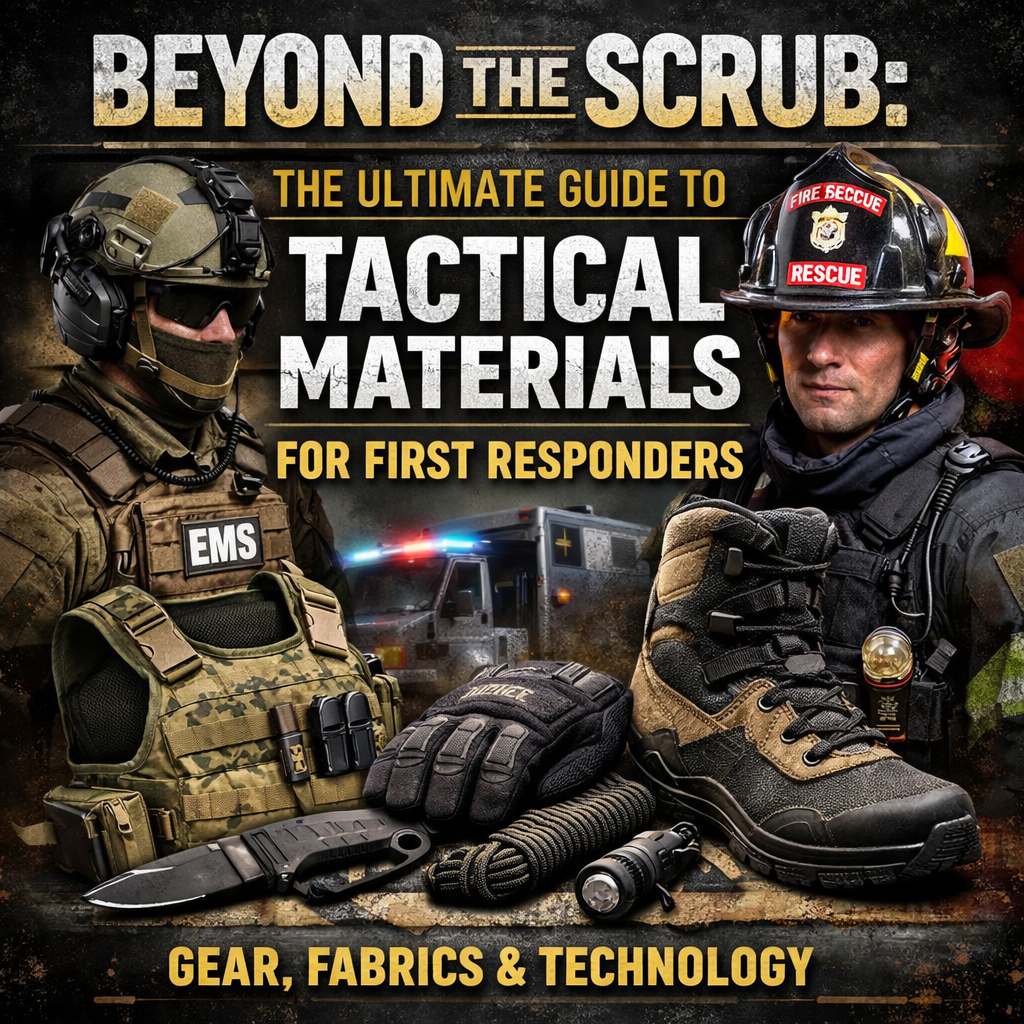
tactical materials
By The Scrub Boutique | A Barco Platinum Retailer
Location: 315 NJ-35 Store #3, Eatontown, New Jersey
Web: thescrubboutiqueultd.com | Phone: 866-245-9816
https://placeholder.com/hero-image-firstresponder.jpg
At The Scrub Boutique in Eatontown, NJ, we know that healthcare and public safety professionals share a common challenge: the need for reliability. Whether you are an EMT rushing into a scene, a police officer on a long shift, or a firefighter managing a chaotic environment, your clothing is your first line of defense. It must be durable, functional, and comfortable.
While we are proud to be a Barco Platinum Retailer—your source for the highest quality medical scrubs—we also understand the evolving needs of tactical first responders. The line between medical and tactical gear is blurring, with advanced material science creating uniforms that protect against ballistic threats, chemical agents, and extreme thermal stress while keeping the wearer mobile and cool.
In this 2000-word guide, we will break down the best materials currently dominating the tactical first responder market, from base layers to outerwear, and explain why fabric choice is just as critical as the gear you carry on your belt.
Table of Contents
-
The Evolution of First Responder Gear
-
Base Layer Technologies: Managing the Climate
-
The Duty Uniform: Blending Durability with Mobility
-
Next-Gen Protection: Nanofibers and CBRN Defense
-
Ballistic Materials: Beyond the Bulletproof Vest
-
Why Fit Matters: The Rise of Female-Specific Design
-
Innovations in CBRN and Chemical Protection
-
Frequently Asked Questions (FAQ)
-
Visit The Scrub Boutique
The Evolution of First Responder Gear
First responders—including paramedics, law enforcement officers (LEOs), and firefighters—face a complex threat landscape. According to recent data, violence against EMS providers is 22 times higher than the national average for other occupations, and fire-ground injuries often include wounds and cuts .
Modern protective equipment must now address multiple threats simultaneously: ballistic impact, stab resistance, chemical exposure, and thermal regulation. The goal of modern material science is to create gear that is robust, multifunctional, and lightweight while preserving mobility . Let’s explore the materials making this possible.
Base Layer Technologies: Managing the Climate
Before donning a ballistic vest or a heavy uniform, what you wear against your skin determines your comfort and performance. A proper base layer is essential for regulating body temperature and moisture management.
Merino Wool Blends
While cotton is comfortable, it retains moisture and loses insulation when wet. This is where Merino wool shines. It is a natural fiber that can hold 30% of its weight in water before feeling wet. It is naturally odor-resistant, stain-resistant, and provides excellent thermoregulation . Companies like 5.11 Tactical have partnered with The Woolmark Company to create poly/wool blends that offer mechanical stretch and a professional appearance suitable for Class A uniforms .
Synthetic Fabrics (Polyester/Nylon)
For high-intensity activities, synthetic base layers made from polyester or nylon blends are often preferred. They are exceptionally lightweight, dry quickly, and are abrasion-resistant. Look for features like:
-
Antimicrobial fabric to inhibit odor .
-
Flat seams to prevent chafing under heavy gear .
-
Moisture-wicking finishes that pull sweat away from the body.
Pro Tip: At The Scrub Boutique, we recommend carrying an extra base layer. Because they are lightweight and thin, you can roll them up and stash them in a cargo pocket for a mid-shift change .
The Duty Uniform: Blending Durability with Mobility
The duty uniform—whether a patrol shirt or tactical pants—must withstand significant abrasion while allowing for a full range of motion.
Ripstop Fabrics
One of the most significant advancements in tactical textiles is ripstop technology. This weaving technique reinforces the fabric with a grid pattern that prevents tears from spreading.
-
Polyester/Cotton Ripstop: A common blend is 65% polyester and 35% cotton, often treated with a Durable Water Repellent (DWR) finish. This combination provides the breathability of cotton with the strength and quick-drying properties of polyester .
Mechanical Stretch
Mobility is non-negotiable when you are bending, kneeling, or running. To achieve this, manufacturers are incorporating elastane into uniform construction.
-
Cotton/Polyester/Elastane Blends: For example, a lower body panel made of 55% cotton, 37% polyester, and 8% elastane knit jersey allows for a wicking finish and significant stretch, ensuring comfort when worn under outer armor carriers .
-
Dual-Fabric Construction: Modern tactical shirts, like the 5.11 Taclite PDU Rapid Shirt, use different materials for different parts of the body. The upper torso might feature durable ripstop for abrasion resistance (shoulders often contact gear), while the lower torso uses a stretchy knit jersey for mobility and comfort under a vest .
Advanced Polyethylene
For personnel shielding, materials like Ultra-High Molecular Weight Polyethylene (UHMWPE) are being used. These are advanced composites that offer incredible strength-to-weight ratios, contributing to lighter and more mobile protective gear .
Next-Gen Protection: Nanofibers and CBRN Defense
Perhaps the most exciting frontier in first responder gear is the integration of nanotechnology. Researchers at organizations like CSIRO have developed a Nano Protective Adsorbent Composite (NPAC) fabric .
How Nanofibers Work
Nanofibers are incredibly fine filaments—at least 100 times thinner than a human hair. They create a membrane with very high porosity. This structure allows them to close all the gaps that harmful aerosol particles would otherwise pass through .
The Benefits
-
Filtration: It effectively filters out harmful particles, chemical aerosols, and biological threats .
-
Breathability: Unlike traditional bulky chemical suits, nanofiber layers allow air to circulate freely, reducing heat stress .
-
Thermal Comfort: Testing has shown these fabrics meet performance targets for air permeability and thermal comfort, which is critical for firefighters and hazmat crews .
This technology is being developed to protect not just military personnel, but also emergency responders battling blazes and healthcare workers navigating infectious environments .
Ballistic Materials: Beyond the Bulletproof Vest
Soft Body Armor (SBA) remains essential. However, the materials inside those vests are constantly evolving. The goal is to improve energy dissipation and impact tolerance without sacrificing flexibility .
3D Warp Interlock Weave
Traditional woven fabrics can be rigid. Newer techniques like 3D warp interlock weave create a more three-dimensional structure that can better conform to the body and manage impact energy.
Shear Thickening Fluid (STF) Coating
Imagine a fabric that is flexible during normal movement but instantly becomes rigid upon impact. This is the promise of Shear Thickening Fluid (STF) . When a ballistic threat or stab occurs, the stress causes the fluid to thicken, creating a temporary, high-strength barrier .
Fiber-Reinforced Composites
These composites combine high-strength fibers (like Kevlar or Twaron) with a polymer matrix to create lightweight panels that protect against fragmentation and ballistic threats .
Why Fit Matters: The Rise of Female-Specific Design
Historically, body armor and tactical gear were designed based on male anthropometric characteristics . With women now representing a significant portion of first responders—up to 35% of EMS providers—this is changing .
The Problem with “Shrink it and Pink it”
Simply making a male-sized vest smaller does not work. Women have different torso shapes, including bust contours, chest width, and waist dimensions. Improperly fitted body armor leads to:
-
Breast compression, causing physical discomfort and psychological reluctance to wear the gear .
-
Limited range of motion at the shoulders and thoracic spine .
-
Gaps in protection, which defeat the purpose of the armor.
Modern Solutions
Manufacturers are now using body scanning with CAD integration to create contoured panels. Techniques like darting and dartless shape construction allow for a better fit over the bust, providing improved coverage, reduced bulk, and greater mobility . At The Scrub Boutique, we advocate for and stock brands that recognize these anatomical differences, ensuring our female first responders are just as protected and mobile as their male counterparts.
Innovations in CBRN and Chemical Protection
For personnel facing Chemical, Biological, Radiological, and Nuclear (CBRN) threats, material technology is critical.
Activated Carbon Fabric (ACF)
One of the leading technologies in this space is Activated Carbon Fabric. Used in suits, masks, and gloves, ACF is highly effective at adsorbing a wide range of chemical agents, including:
-
Sarin and VX (Nerve agents)
-
Mustard Gas
-
Cyanide
These fabrics meet stringent NATO standards (AEP-85 and AEP-38) and are designed to be durable and tear-resistant. They are often constructed as a non-woven layer that sits between the outer shell and the lining of a suit, making the protection invisible but highly effective .
Frequently Asked Questions (FAQ)
Q1: What is the best material for a first responder base layer?
A: It depends on the environment. Merino wool is excellent for odor control and temperature regulation in varied climates. Synthetics (polyester/nylon blends) are better for high-intensity activity because they dry incredibly fast and are very durable. Avoid cotton for base layers as it retains moisture .
Q2: What does “ripstop” mean in tactical clothing?
A: Ripstop refers to a reinforcing technique using a special weaving pattern that looks like a grid. This grid prevents tears from spreading across the fabric. If the fabric gets snagged or cut, the tear stops at the reinforced grid line, ensuring the garment maintains its structural integrity .
Q3: I am a female EMT. Why is women-specific gear important?
A: Standard gear is often designed for male bodies, leading to poor fit over the bust and hips. This can restrict movement, cause discomfort, and create gaps in ballistic protection. Women-specific gear uses contoured panels and darting techniques to accommodate anatomical differences, ensuring both safety and mobility .
Q4: How do nanofibers protect against chemicals?
A: Nanofibers create a dense, porous membrane. The fibers are so fine (100x thinner than a human hair) that they physically block harmful aerosols and particles from passing through, while still allowing air (water vapor) to escape. This provides a barrier against chemical and biological threats without the heat stress of older protective suits .
Q5: What is the difference between Soft Body Armor and Hard Body Armor?
A: Soft Body Armor is typically made of multiple layers of strong woven fabrics (like Kevlar or UHMWPE) and is designed to protect against handgun threats and fragmentation. It is flexible and weighs less than 4.5 kg. Hard Body Armor uses rigid plates (ceramic or steel) and is designed to stop high-velocity rifle rounds .
Q6: Can tactical materials be used for everyday medical scrubs?
A: Absolutely! The same principles of moisture-wicking, durability, and mobility apply to long shifts in a hospital. As a Barco Platinum Retailer, we offer scrubs that utilize similar fabric technologies—like stretch fabrics and fluid-repellent finishes—to ensure healthcare workers are comfortable and protected. Stop by our Eatontown location to feel the difference!
Visit The Scrub Boutique
Navigating the world of high-performance fabrics can be overwhelming, but you don’t have to do it alone. At The Scrub Boutique, we serve the dedicated first responders of Eatontown and beyond. Whether you need durable duty uniforms, comfortable base layers, or the highest quality Barco scrubs for the medical side of the house, we have the expertise to fit you properly.
We understand the mission. We know the gear.
Stop by our store at 315 NJ-35 Store #3, Eatontown, New Jersey, browse our collection online at thescrubboutiqueultd.com, or give us a call at 866-245-9816.
Stay safe, stay mobile, and stay protected.
Disclaimer: While The Scrub Boutique is a retailer of high-quality apparel, specific tactical and ballistic gear should always be selected based on department requirements and certified safety standards (e.g., NIJ, NFPA). This blog is for informational purposes and highlights material technologies.